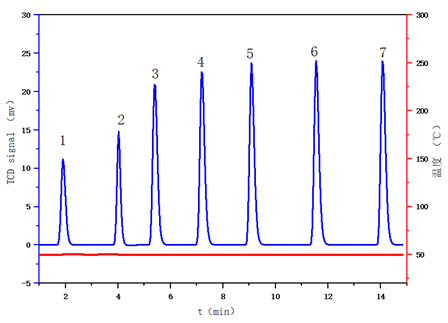

There are many members in the molecular sieve family, among which ZSM-5 has the most extensive practical applications and more thorough research. The most typical feature of ZMS-5 is its strong acidity, so its application is mainly focused on acid catalyzed reactions. It is very important to study the surface acidity of ZSM-5 molecular sieves, among which NH3-TPD is the most classic and practical method.
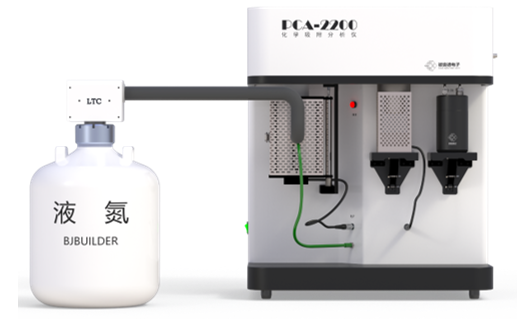
Builder PCA-2200 fully automatic chemical adsorption instrument can not only perform NH3-TPD experiments to test the acidity of ZSM-5 molecular sieves, but also perform temperature programmed reduction (TPR), temperature programmed oxidation (TPO), temperature programmed sulfurization (TPS), temperature programmed surface reaction (TPSR), and so on. The temperature programmed analysis technique can obtain the following important information when studying the desorption behavior and various reaction processes of catalyst surface molecules during heating:
1. The types, densities, and energy distributions of surface adsorption centers, as well as the bonding energies and states of adsorbed molecules and adsorption centers;
2. The type, density, and energy distribution of active centers in catalysts, as well as the dynamic behavior and reaction mechanism of reaction molecules;
3. The interactions between active components and carriers, between active components, between active components and co catalysts, and between co catalysts and carriers;
4. Various catalytic effects - synergistic effect, overflow effect, alloying effect, co catalytic effect, carrier effect, etc;
5. Catalyst deactivation and regeneration.
contact
Be the first to know about our new product launches, latest blog posts and more.Any question or request?
Click below, we’ll be happy to assist. contact