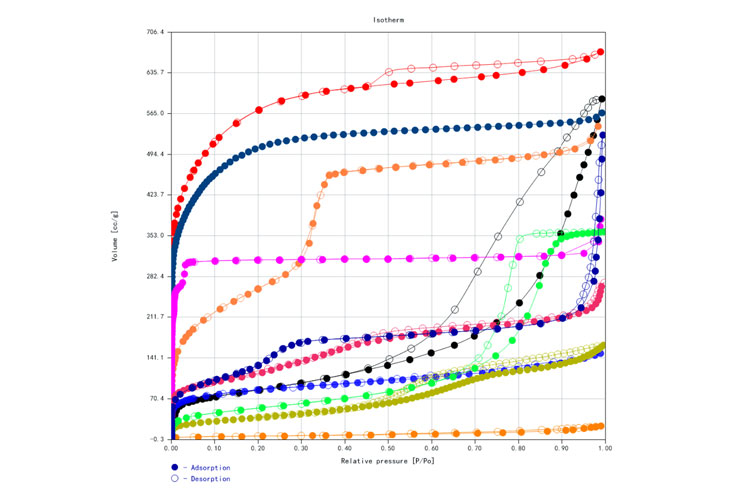

In materials science, specific surface area, pore size, pore size distribution, and total pore volume are key parameters for measuring material properties. Specific surface area refers to the total surface area of a material per unit mass or volume, usually expressed in square meters per gram (m ²/g) or square meters per cubic centimeter (m ²/cm ³). It not only affects the adsorption capacity and kinetics of materials, but also directly relates to catalytic activity, reaction rate, and thermal stability.
In catalyst preparation, materials with high specific surface area usually have more active sites, thereby improving catalytic efficiency. In the field of lithium-ion batteries, electrode materials with high specific surface area can significantly improve the charging and discharging performance of batteries.
The measurement of specific surface area is usually based on gas adsorption method, among which BET theory is the most commonly used. The BET theory accurately calculates the specific surface area and pore structure by measuring the adsorption capacity of a material for a specific gas (such as nitrogen) at low temperatures. This method is applicable to various materials ranging from micropores to macropores, and can provide detailed pore size distribution and specific surface area data.
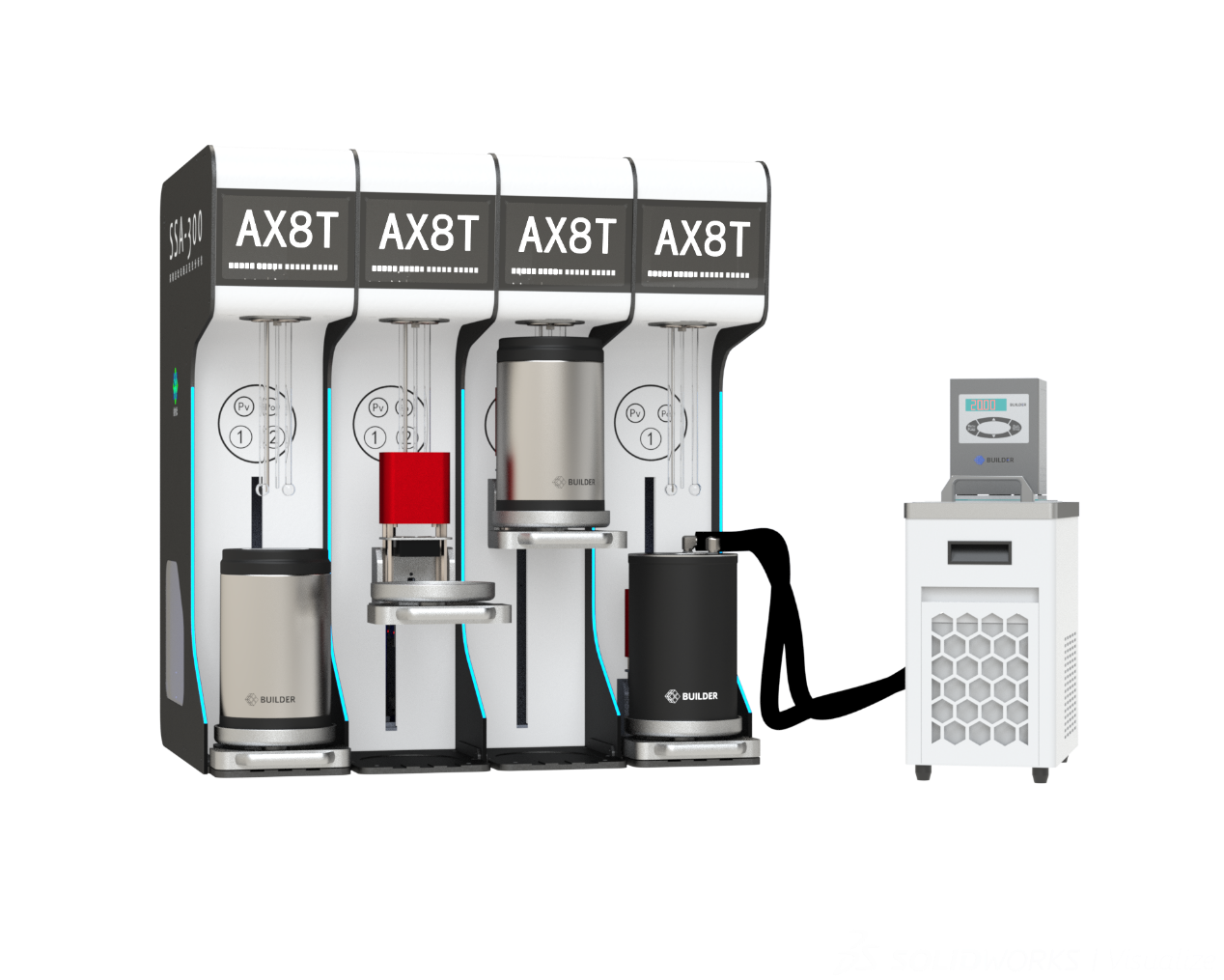
The Builder surface area and pore size analyzer uses advanced gas adsorption technology, combined with BET theory, to quickly and accurately measure the specific surface area and pore structure of materials.
High precision measurement: High sensitivity pressure sensors and temperature compensation systems are used to ensure high accuracy and repeatability of measurement results.
Multiple analysis modes: supporting comprehensive analysis of micropores, mesopores, and macropores to meet the research needs of different materials.
Automated operation: equipped with intelligent software, supporting automated analysis and data processing, improving experimental efficiency.
Multi site design: capable of processing multiple samples simultaneously, significantly improving experimental throughput.
contact
Be the first to know about our new product launches, latest blog posts and more.Any question or request?
Click below, we’ll be happy to assist. contact