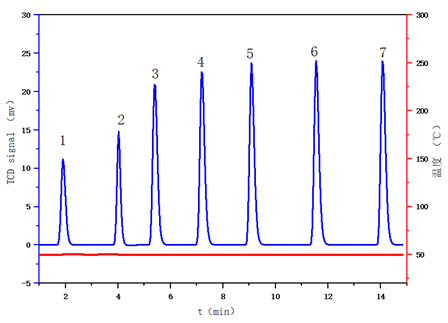

1.TPD (Temperature Programmed Desorption)programmed temperature desorption technology
Also known as thermal Desorption technology, when the catalyst is heated, the molecules adsorbed on the surface of the catalyst are heated to reach the desorption activation energy during desorption. The desorption process occurs. The binding ability between the adsorbent and the catalyst is studied. The kinetics of desorption occurs at temperature and surface coverage. The number of adsorption types (active centers), the intensity of adsorption types (energy), the density of active centers, the order of desorption reaction (the interaction of adsorbed particles), and the surface energy distribution (the degree of surface uniformity) can be known by TPD spectra. Information obtained by temperature programmed desorption of NH3-TPD ammonia
2.Effective information for temperature programmed desorption of NH3-TPD ammonia
Temperature programmed desorption of NH3-TPD ammonia is an experimental method to characterize the acidic site/acid content of the catalyst. In this experiment, the catalyst needs to pre-adsorb ammonia gas, and then heat the carrier gas (generally N2\Ar\He and other inert gases) at a certain temperature programmed rate under purging, so that the carrier gas passes through the catalyst bed. The concentration signal of NH3 desorbed at each temperature point in carrier gas was measured.
The adsorbent is usually desorbed at different temperatures with different acid sites. Information such as the number of acid sites, temperature of acid center, acid strength and distribution can be obtained from the obtained TPD map. The acid content value (mmol/g) can also be obtained by different "quantitative" methods in the experiment.
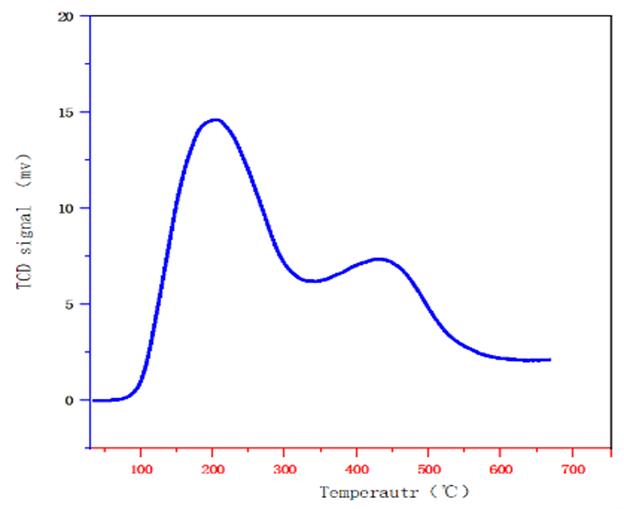
Typical NH3-TPD spectrum
3.what are the TPD experimental test instruments
Using the PCA1200 automatic chemisorption instrument produced by builder, the chemisorption instrument can perform automatic TPD, TPR, TPO, TPS, TPSR, static and dynamic oxygen storage, metal dispersion and other in-situ thermal catalytic characterization, and can also choose the photothermal coordination in situ characterization system. To explore the effect of light on catalyst performance, PCA1200 chemisorbed instrument has multiple quantitative methods, such as pulse method, standard object method, standard curve method, analog quantitative method, etc. The instrument reserves GC/MS/IR and other analytical interfaces to achieve qualitative characterization of complex products.
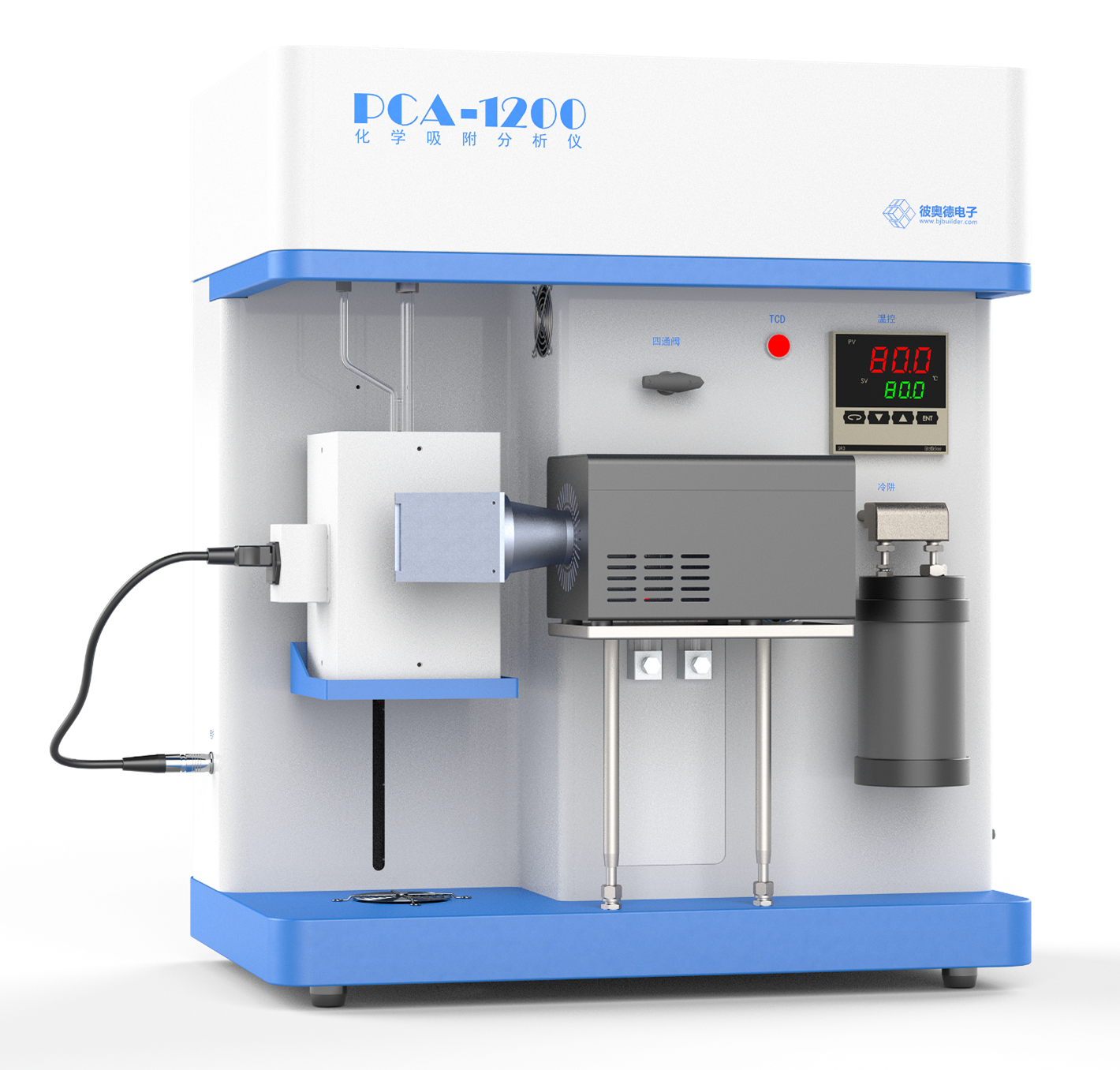
Photothermal collaboration in situ characterization chemisorbed instrument
contact
Be the first to know about our new product launches, latest blog posts and more.Any question or request?
Click below, we’ll be happy to assist. contact